
Hazel eyes shift between green, gold and brown depending on the light. That is exactly why they turn heads, and why they are hard to pin down. If you have them, or you want them, it helps to know what is really going on in your iris (the coloured ring around your pupil). This guide covers what gives them their colour and why lighter irises deserve a little extra sun care. It also shows how to get the hazel look if you were not born with it. This is general information, not a diagnosis, so book an eye exam if anything about your eyes changes suddenly.
How eye colour is determined
Your eye colour comes down to one pigment, melanin, and how much of it sits in the front layers of your iris. [1] It is the same pigment that colours your skin and hair. The amount your body makes is set mostly by your genes.
Melanin
The more melanin your irises hold, the darker they look. [2] Brown eyes carry the most, and blue eyes the least. Hazel sits in the middle. Melanin does more than add colour. It also soaks up light, and that second job matters when we get to sun care.
Genetics
Eye colour was once taught as a tidy rule: brown is dominant, blue is recessive. Geneticists have since scrapped that, because eye colour is shaped by dozens of genes and DNA variations. [3] Two genes on chromosome 15 (OCA2 and HERC2) do much of the heavy lifting. The inheritance is far more tangled than anyone once assumed. [1] That is why two blue-eyed parents can still have a brown-eyed child, and why your hazel might not match either parent. [1]
What causes hazel eyes?
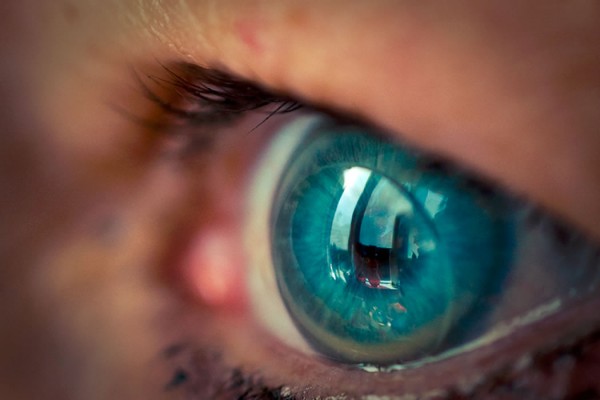
Hazel eyes carry less melanin than brown eyes, but more than blue or green ones. The colour you see is a blend of brown, gold and green that rarely sits evenly across the iris. [3]
Here is the part that makes hazel special. Your iris has two layers, and for almost everyone the back layer holds brown pigment. In hazel and green eyes, the front layer carries a light brown pigment. It sits over an iris that scatters the shorter, bluer wavelengths of light. The eye then reads as green, gold or speckled rather than plain brown. [2] Because so much of the effect comes from scattered light, they can look different from one room to the next.
Medical reasons hazel eyes can change colour
A handful of conditions and medications change how a hazel eye looks, and most are harmless. Still, a new or one-sided change is worth a call to your eye-care professional, because your eyes are not the place to guess.
- Iris freckles: small darker spots of extra pigment in the front of the iris can stand out from the area around them, much like freckles on your skin. [3]
- Heterochromia: rarely, one eye is a completely different colour from the other, or a ring around the pupil is. [3]
- Eye drops: prostaglandin drops that lower eye pressure, such as latanoprost, can slowly add brown pigment to the iris. Lighter, mixed shades show it most. [4]
- Age-related changes to the lens behind the iris can also shift the colour you see in the mirror. [3]
Do hazel eyes change colour?
Day to day, they do appear to shift. Because hazel gets so much of its colour from scattered light, the shade you see moves with the lighting. [2] Even the colour you wear can seem to nudge it warmer or cooler. That is a trick of the light, not your iris repigmenting.
Real, lasting changes happen at certain points. Most babies’ eyes settle into their adult colour within the first year, with many darkening as melanin builds. [3] In adulthood, a colour change that sticks around, especially in just one eye, is worth having checked rather than shrugging off.
How common are hazel eyes?
It depends on where you look. Brown is far and away the most common eye colour worldwide, held by more than half of all people. Green is the least common, at around 2 per cent. [3] Hazel sits between them. In a 2014 Harris Poll commissioned by the American Academy of Ophthalmology, about 18 per cent of Americans said they had hazel eyes. [2] Self-reported US figures run higher than measured global prevalence, because people often count light-brown and green eyes as hazel.
Caring for hazel eyes
Hazel eye care is mostly ordinary eye care, with one twist. Lighter irises hold less melanin, the built-in pigment that soaks up light. That is why they let in a little more light and glare than brown eyes do, and why bright days can feel harsher.
The everyday sun advice just matters a little more for you. The American Academy of Ophthalmology recommends sunglasses that filter 100 per cent of ultraviolet (UV) rays, shown on the label as UV or UV400. Wear them whenever you are outside during the day. [5] If glare bothers you on the water or the road, polarized sunglasses cut the reflected light that bright surfaces throw back. You can get the same UV filter in prescription sunglasses if you need your script.
Beyond the sun, hazel eye care is the reliable basics: routine eye exams, clean hands before you touch your eyes and a proper fitting before any contact lens. See your eye-care professional if your vision changes, an eye stays red or the colour itself shifts on its own.
Get the hazel look with coloured contacts
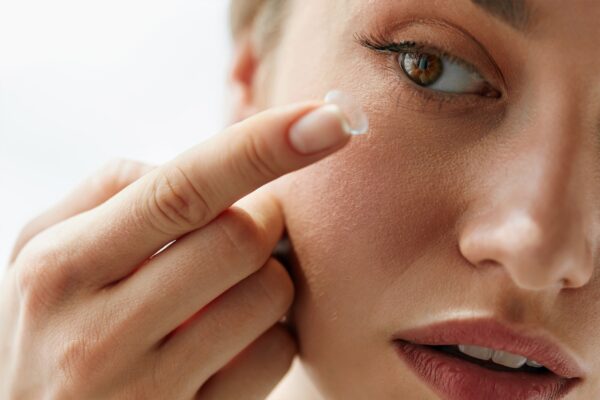
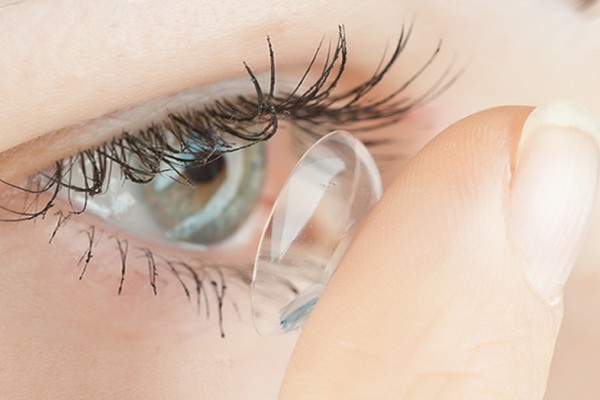
Not born with hazel eyes? You can borrow the look. Coloured contact lenses layer a printed tint over your natural iris. The better ones build the colour in rings, so the result reads like a real eye, not a flat sticker.
A few carry a true hazel or a hazel-adjacent shade. Alcon Dailies Colors uses a 3-in-1 colour design (an inner ring, a main colour and an outer ring) and comes in a hazel as a daily lens. Air Optix Colors offers a ‘pure hazel’ among its shades on a monthly schedule. If you want a subtle boost rather than a full swap, Acuvue Define adds definition around your own colour, built with Lacreon technology for moisture. For a bolder change, Interojo’s Splash of Color range runs from warm ambers to greens.
One rule holds even for plano (zero-power) colour lenses. They are medical devices, so you need a proper fitting and a prescription from your eye-care professional before you wear them. When you are ready, browse our coloured contact lenses and find a shade that suits you. Hazel is a look plenty of people chase, and it is yours to try.
Sources
[1] MedlinePlus Genetics (US National Library of Medicine), “Is eye color determined by genetics?” (medlineplus.gov) — eye colour is directly related to the amount of melanin in the front layers of the iris; inheritance is more complex than once thought because multiple genes are involved, with OCA2 and HERC2 on chromosome 15 playing major roles, and blue-eyed parents can have a brown-eyed child.
[2] American Academy of Ophthalmology, “Your Blue Eyes Aren’t Really Blue” (aao.org) — the more melanin in the eye, the darker it looks; the iris has two layers and the back layer holds brown pigment for almost everyone, while hazel and green eyes have light brown pigment in the front layer that interacts with the shorter, scattered wavelengths of light; the article reports a 2014 Harris Poll (commissioned by the AAO) in which about 18 per cent of surveyed US adults self-reported hazel eyes.
[3] Cleveland Clinic, “Eye Colors” (my.clevelandclinic.org) — eye-colour genetics involve dozens of genes and DNA mutations; hazel eyes have less melanin than brown and more than blue or green and combine brown, gold and green; iris freckles come from darker spots in the front layer; heterochromia is one eye a different colour from the other; age-related lens changes and other conditions can change how eye colour looks; babies’ eyes often settle in the first year; more than half the world has brown eyes and about 2% have green.
[4] Mayo Clinic, “Latanoprost (ophthalmic route)” (mayoclinic.org) — latanoprost, a prostaglandin drop used to lower eye pressure, may gradually increase the amount of brown pigment in the iris.
[5] American Academy of Ophthalmology, “The Sun, UV Light and Your Eyes” (aao.org) — UV rays can damage the eye, so select sunglasses that filter 100% of UV, shown on the label as UV or UV400, and wear them outdoors during the day.