

Today’s contact lenses let people with presbyopia see clearly at a range of distances. Maybe you need reading help on its own, or a reading prescription on top of your distance correction. Either way, multifocal and bifocal contact lenses are worth exploring with your eye-care professional.

What is presbyopia?
Most people start to notice blurry near vision in their early to mid-40s. Small print gets harder to focus on. This is called presbyopia, and it comes on naturally as you get older. [1]
Presbyopia is also known as ‘short arm syndrome’. You find yourself holding a menu or your phone at arm’s length to read it.
What causes it?
The lens inside each eye (the clear part that focuses light) is normally soft and flexible. As you age, it slowly stiffens. Once the lens can’t change shape as easily, your eyes lose some of their power to focus up close. That is why close-up text drifts out of focus. [2]
How do contact lenses for presbyopia work?
Multifocal and bifocal contact lenses give you distance and near vision from one lens. So you don’t have to switch between pairs of glasses through the day. They do this by holding more than one prescription in a single lens.
Bifocal contacts have two focal points, one for distance and one for reading. Multifocal contacts go further with three focal points, for distance, middle and near vision. Multifocal contacts are sometimes called progressive contact lenses, because they blend prescriptions much like progressive eyeglasses do.
Types of multifocal contact lenses
There are three common types of multifocal lens. Each one blends your prescriptions in a slightly different way.
Concentric multifocal lenses
Concentric lenses set out rings of prescription on the lens, a bit like a bull’s eye. The rings switch between distance and near vision, with a smooth change from one to the next.
The 1 Day Acuvue Moist Multifocal and Air Optix Plus HydraGlyde Multifocal are two we carry. The Acuvue Moist is a daily lens with Acuvue’s LACREON Technology. The Air Optix Plus HydraGlyde is a monthly lens, with a HydraGlyde Moisture Matrix for long-lasting hydration.
Aspheric multifocal lenses
Aspheric lenses work more like progressive eyeglasses. The prescription changes gradually from the centre outwards, with no visible lines. There is no hard edge between distance and near.
DAILIES TOTAL1 Multifocal and Biofinity Multifocal are two aspheric options we carry. DAILIES TOTAL1 is a Water Gradient daily lens that gives a cushion of moisture for 16 hours of comfort. These lenses are usually weighted so they sit the right way up on your eye.
Segmented bifocal lenses
Segmented bifocal lenses come only as rigid gas permeable (RGP) lenses. This is a firmer lens that keeps its shape on the eye. They look like bifocal glasses. The distance prescription sits in the top half and the reading prescription in the bottom half. The base is flattened so the lens stays in place.
These lenses are made to measure for each wearer. That is why you order them through your eye-care professional.
How do I know if my prescription is for these lenses?
Your contact lens prescription lists a few things: the brand, the power or sphere (your overall lens strength), the base curve, the diameter and the ADD power. The base curve and diameter are given in millimetres, and lens powers in dioptres. The ADD power (the reading strength that makes a lens multifocal) is a plus value, such as +2.00. An RGP prescription also lists colour and dot details.
You might have astigmatism as well as presbyopia. If your prescription includes a cylinder and axis (the numbers that describe astigmatism), there are toric multifocal lenses too, such as the Bausch & Lomb ULTRA Multifocal for Astigmatism.
All contacts fit differently and use different materials. Lenses that were not prescribed for you can cause discomfort or infection. So a valid, up-to-date prescription matters. If you are not sure how to read yours, your optometrist can talk you through each value.

What are some other options for presbyopia?
Multifocal and bifocal contacts are not the only route. Your eye-care professional can point you to the option that suits your eyes best. Here are the main alternatives.
Monovision
Monovision uses single-vision contact lenses. You wear the distance lens on your dominant eye. You wear the near lens on your other eye, with the distance power eased back so you can read.
Your optometrist or contact lens fitter has to set this up. They balance the vision between your two eyes and check the fit.
Using glasses with your contacts
Your optometrist may suggest reading glasses worn over distance contact lenses. This lets you see up close when you need to. It can also cut the edge-of-vision distortion that progressive eyeglasses sometimes bring.
Ordering progressive/bifocal glasses
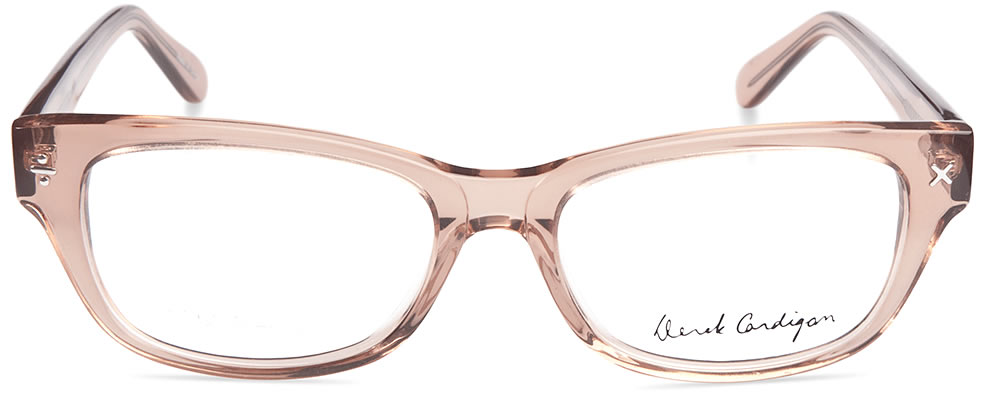
Prefer glasses to contacts? There are lens options that help you see clearly at different distances too. We offer progressive and bifocal lenses, plus a special office progressive lens called DualView. You can browse the full range on our glasses pages whenever you’re ready.
Ordering multifocal contacts with us
Once your contact lens prescription is up to date, you’re ready to order. Visit our multifocal contact lenses page to see the full range we carry, from Acuvue and Air Optix to DAILIES TOTAL1. Clear vision is only a click away!
Sources
[1] Mayo Clinic — presbyopia is a normal, gradual part of aging that usually becomes noticeable in your early to mid-40s. (mayoclinic.org)
[2] American Academy of Ophthalmology — presbyopia develops as the eye’s natural lens becomes less flexible with age, making it harder to focus on nearby objects. (aao.org)