

You are at the checkout, prescription in hand, and the same question stops you every time: what will a year of contacts really cost? Lens pricing feels murky, because it hides behind pack sizes, wear schedules and a separate fitting fee. Let us clear it up. At Clearly, the price comes down to a few things you control, and once you see them, you can budget without the guesswork.
The short answer on what contacts cost
If you have ever tried to pin down the cost of contacts, you know the answer is slippery. People ask it in different ways, from ‘how much are contacts’ to ‘how much do contacts cost’ or ‘how much does it cost for contact lenses’. But it always rests on three things: the type of lens you wear, how complex your prescription is and how many boxes you buy at once. As a rough guide, a box of standard soft lenses at Clearly runs about $30 to $95 CAD at the time of writing. Most people buy several boxes to cover a full year.
Prices shift as brands update their lines, so treat any box figure as a starting point and check the current number before you order. Contacts are sold by the box, perhaps a 90-pack of daily lenses, for example, or a smaller box of monthlies. You wear two lenses at a time, one for each eye. So your yearly cost is really the box price carried across the whole year. That is why the lens type matters far more than any single sticker price.
Daily disposables vs monthly lenses: the biggest cost lever
The biggest lever on your budget is the choice between daily and monthly lenses. Most of us pick one pattern and stick with it for years, so it pays to choose well. Daily disposables are worn once, then binned at night. You open a fresh pair each morning and never clean them. A 30-pack covers about two weeks for both eyes, while a 90-pack stretches to roughly six weeks. We price value dailies like Bausch & Lomb SofLens Daily Disposable and Biotrue ONEday near the bottom of the range. Premium dailies climb higher: Alcon DAILIES TOTAL1, for one, has a Water Gradient surface (nearly 100% water at the very outer edge) that stays soft for 16 hours.
Monthly lenses work the other way. You wear one pair for up to a month, then clean and store it each night in solution. A box of six monthlies lasts one eye about six months, so a single box covers a long stretch of the year. CooperVision Biofinity in breathable silicone hydrogel and Alcon AIR OPTIX plus HydraGlyde are two examples. The per-box price looks similar to dailies, but you buy far fewer boxes.
Here’s what the yearly maths comes down to. Daily lenses often cost more across 12 months, because you get through hundreds of them. But you skip cleaning solution and cases entirely. Monthlies cost less in lenses, but you add the price of solution to your total. Neither is simply cheaper; they just spend your money differently.
| Factor | Daily disposables | Monthly lenses |
| Replacement | A fresh pair every day | One pair worn up to 30 days |
| Boxes per year | Many, sold in 30 and 90-packs | Few, sold in boxes of 6 |
| Cleaning | None needed | Nightly solution and a case |
| Suitable for | Part-time wear, travel and sport | Everyday wearers chasing the lowest lens cost |
When your prescription adds to the price
Your prescription is the next thing that moves the price. If you have astigmatism or need reading help, your lenses cost more to make. A simple short- or long-sighted prescription uses a standard spherical lens, which is the least expensive kind.
Astigmatism is a common quirk. The eye is shaped more like a rugby ball than a soccer ball, which blurs vision at every distance. It needs a toric lens, which is a lens weighted to sit in one spot on the eye instead of spinning. Acuvue Oasys for Astigmatism uses a BLINK STABILIZED design to stay put, built from a silicone hydrogel called senofilcon A. Bausch & Lomb Biotrue ONEday for Astigmatism keeps a Peri-Ballast shape that holds 98% of its moisture for up to 16 hours. A toric lens often costs more than the plain version of the same brand.
The other pricier prescription is presbyopia, the age-related change from your 40s, when close-up focus fades. It calls for a multifocal lens (one that carries distance, intermediate and reading powers in a single lens). Bausch & Lomb Biotrue ONEday for Presbyopia uses a 3-Zone Progressive design, with an add power that runs from +1.75 to +2.50 for stronger reading needs. When you have astigmatism and presbyopia together, one lens can cover both. The Bausch & Lomb ULTRA Multifocal for Astigmatism does exactly that. Specialty boxes like these run higher, roughly $130 to $150 CAD at the time of writing, so check the current box price before you order.
The exam and fitting you pay for first
Before any lens goes in the cart, one cost comes first: the eye exam and the contact lens fitting. In Canada you cannot buy contacts without a valid prescription. Contacts also need their own fitting on top of a routine eye exam, because they rest right on the eye. The Canadian Association of Optometrists (CAO) explains that a fitting follows a valid eye exam, and that the fitting is what sets your contact lens prescription. [1]
The fitting adds measurements your glasses prescription never includes (the curve and diameter of the lens), so expect a separate fee for it. What you pay for the exam itself varies by province, and by whether you carry private insurance. Some provincial plans cover routine exams for children and seniors, while many adults pay out of pocket. Your prescription then stays valid for one to two years, after which a quick check-up keeps it current.
How to spend less on your contacts
A few habits keep the yearly total down. When you are watching the budget, small changes add up fast. A full-year order often earns a better per-box price and trims shipping, and it means you reorder once rather than every month. If you want the lowest outlay, a value line stretches your dollar furthest. That might be a plain monthly lens, or a low-cost daily like Interojo Splash ONEday. Watch for a price-match promise too, which lets you lock in a good number without hunting across sites.
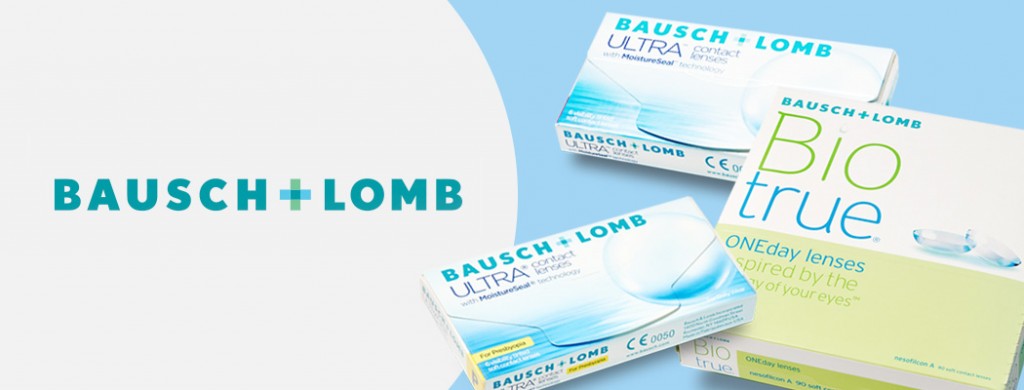
One tempting saving is the wrong one. Push a lens past its replacement schedule to save a few dollars, and you trade comfort and eye health for very little. The CAO is clear on this point: wear lenses only for the length of time recommended, even when they still feel fine (Canadian Association of Optometrists). [2] To weigh value across brands, we’d point you to the Bausch & Lomb range, which runs from budget dailies through premium monthlies.
The bottom line
Contact lenses are less a single price than a set of choices. Pick your replacement schedule first, because daily versus monthly moves your yearly cost more than anything else. Add a toric or multifocal lens if your prescription needs one. Budget for the exam and fitting up front, then buy a year at a time to keep the per-box price low. Ready to see what your prescription actually costs? Explore our contact lens range, compare daily and monthly options, and we will get your boxes on their way.
Sources
[1] Canadian Association of Optometrists, “Valid Optical Prescription” (https://opto.ca/document/valid-optical-prescription) — a contact lens fitting follows a valid eye exam, and the fitting sets your contact lens prescription.
[2] Canadian Association of Optometrists, “Wear and Care for Contact Lenses” (https://opto.ca/health-library/wear-care-for-contact-lenses) — wear lenses only for the length of time recommended, even when they still feel fine.