

Want green eyes for a wedding, a costume, or just a change of pace? Coloured contact lenses can do it in seconds. Canadians wear them to switch up a look completely, or to lift the shade they already have. In the United States the same lenses are spelled ‘colored contacts’. [1] On either side of the border, the fit and the care matter most.
One thing is worth knowing before you buy. In Canada, every coloured lens is a regulated medical device. Handled the right way, that is exactly what lets you wear any shade with confidence. This guide covers how the lenses work, the colours you can buy, what they cost, and where to buy coloured contacts safely.
How coloured lenses change your look
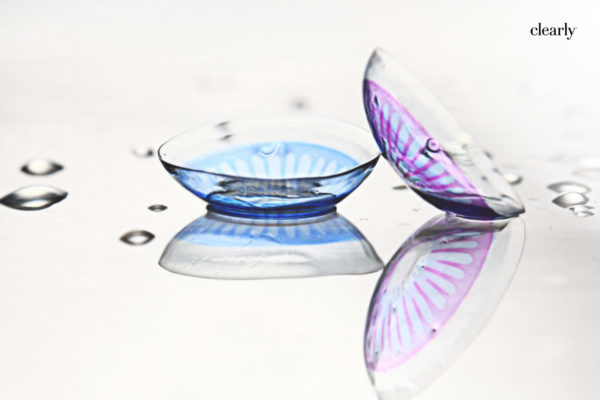
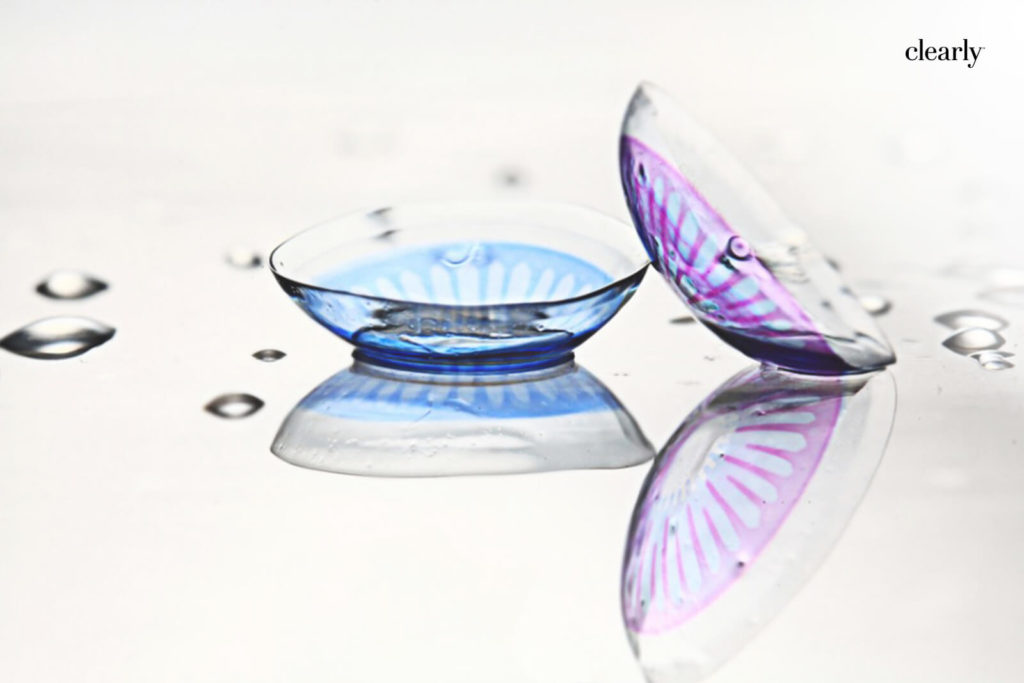
Picture the eye colour you want. Then think about how the tint is built into the lens. Every coloured lens adds pigment over your iris (the coloured ring around your pupil). The options fall into three families.
Enhancement tints are see-through, so they deepen the colour you were born with. The daily Acuvue Define range (Accent, Vivid and Natural Shine) adds contrast in lighter eyes. Opaque tints carry more pigment, enough to cover even a dark iris. Air Optix Colors and Alcon Dailies Colors both use a 3-in-1 design. It layers an inner ring, a primary colour and an outer ring, so the result looks natural. Air Optix goes further and seals the pigment inside the lens, so only its smooth surface touches your eye.
Circle lenses are the boldest of the three. They print a dark limbal ring around the edge of the lens, which makes the iris look larger. That is how Interojo’s Splash Illusion Brown and Black work.
| Tint style | How the colour is built | Best for | Example lines |
| Enhancement (see-through) | Deepens your natural colour | Light or medium eyes | Acuvue Define Natural Shine |
| Opaque (3-in-1) | Fully changes eye colour | Dark or light eyes | Air Optix Colors, Dailies Colors |
| Circle (limbal ring) | Enlarges the look of the iris | A bold, defined look | Splash Illusion Brown and Black |
On very dark brown eyes, an opaque lens shows up boldest. An enhancement tint barely whispers.
Choosing a shade for your natural eye colour
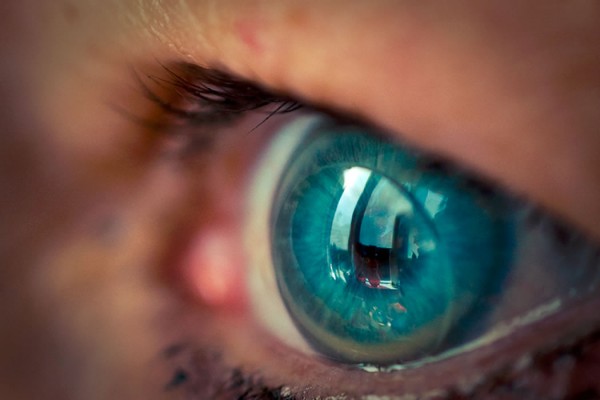
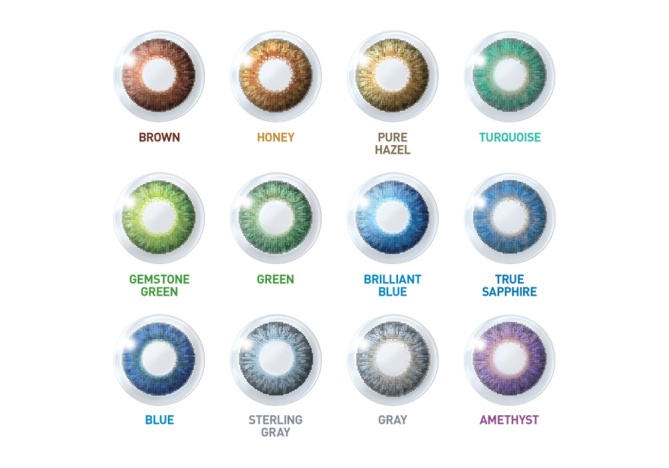
The colour on the box is not always the colour you see in the mirror. Your own iris shows through the tint. On deep brown eyes, an opaque shade gives the boldest change. Try Air Optix Colors in gemstone green or sterling gray. Alcon Dailies Colors covers the same ground in blue, hazel, grey and green.
For lighter eyes, an enhancement tint keeps things subtle: Acuvue Define Vivid adds a soft brown contrast. Natural Shine lifts the tone you have without hiding it. Interojo’s Splash of Color leans into the fun, from Amber Ambition and Brown Bombshell to Green Envy and Violet Venom. For instance, test one bold shade and one natural shade before a big event. A colour that dazzles in daylight can read differently indoors.
Daily, weekly or monthly: how often will you wear them?
Most of us buy coloured contacts for one reason or another. How often you wear them decides which pair makes sense, price included. For a single costume or one wedding, daily disposables win. You wear a fresh pair once, then bin it that night, with nothing to clean.
Interojo’s Splash Illusion Brown costs about $26.39 for 30 daily lenses. The daily Acuvue Define range runs about $43.19. Alcon Dailies Colors sits near $56.79 for a 30-pack.
If colour is part of your regular look, monthly lenses earn their keep. Air Optix Colors last up to a month per lens, at about $85.59 for a six-pack. Interojo’s Splash of Color monthlies start at just $8.79 a box. The weekly-wear Splash of Color 2 lands near $16.79. That said, reusable lenses need cleaning and fresh solution every night. Factor that small habit into the lower price.
Coloured contacts and your prescription
Most coloured lenses are spherical. That means they correct short-sightedness or long-sightedness, but not astigmatism. Interojo’s Splash of Color is aimed at nearsighted wearers. The Acuvue Define range covers both near and farsighted prescriptions.
Coloured toric lenses (lenses shaped to correct astigmatism) are still uncommon, and coloured multifocals are rare too. Your optometrist might pair a clear toric lens for everyday wear with a tinted lens for special days. It is worth browsing the clear toric range to see what your prescription supports.
Prefer no correction at all? You can wear plano lenses (0.00 power, worn purely for looks). Even those need a prescription and a fitting in Canada. No coloured lens sold legally here is truly ‘no-prescription’, whatever a costume-shop sign might promise.
Wearing coloured contacts safely
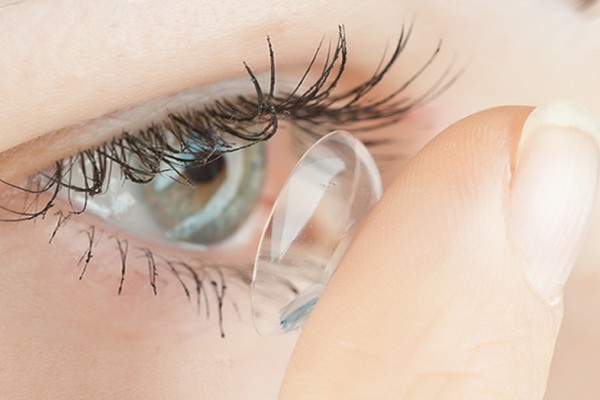
It’s natural to wonder whether something that sits on your eye is safe. The good news is simple. A short fitting is what makes wearing any colour easy. Your eye-care professional measures the curve and width of your eye, so the lens seats correctly. A lens that is too tight or too loose can scratch the cornea or starve it of oxygen.
This care is written into Canadian law. Since 16 July 2016, Health Canada has regulated decorative lenses as Class II medical devices. [2] That includes plano lenses, the same class as the ones that correct your sight. The Canadian Association of Optometrists warns that poor lens use raises the risk of eye infections, allergic reactions and dry eye. [3] The fitting matters as much as the shade.
Buy only from a seller licensed to sell contact lenses in Canada. Skip the novelty and costume lenses from pop-up shops and unregulated websites, which Health Canada has warned about more than once. [4] A few simple habits keep every wear safe:
- Wash and dry your hands thoroughly before you touch a lens.
- Never share coloured contacts with a friend, however well a matching costume would look.
- Throw daily lenses out after one wear, and never sleep in any lens unless your optometrist has cleared it.
- Store reusable lenses in fresh solution overnight, never in water or saliva.
Some coloured lenses include a built-in UV filter. Splash Illusion and the Acuvue Define range (with Lacreon Technology, a moisture-retaining lens material) are examples. Still, a contact covers only part of your eye, so it is no stand-in for sunglasses. If an eye turns red, sore or extra sensitive to light, take the lens out and see an eye doctor promptly.
Where to buy coloured contacts in Canada
When you’re ready to buy, the seller counts as much as the lens. At Clearly, you can shop the full contact lenses range and add your prescription at checkout. The coloured options span Interojo, Alcon and the daily Acuvue Define family. Prices run from about $8.79 for Interojo’s Splash of Color to roughly $85.59 for a six-pack of Air Optix Colors. Alcon Dailies Colors sits in between, and every lens is licensed for sale in Canada.
You get the selection and value of a large online store, without the gamble of a novelty-shop lens. For a single event, the daily disposables on the daily contacts range are the easiest place to start.
The bottom line
Coloured contacts are one of the quickest ways to change your look. You can go from the barely-there lift of Acuvue Define to the head-turning swap of Air Optix Colors. The trick in Canada is simple. Treat them like the medical device they are, then enjoy the part that drew you in. When you have settled on a shade, explore Clearly’s coloured contacts collection and upload a current prescription to order.
Sources
[1] U.S. Food and Drug Administration, “Colored and Decorative Contact Lenses: A Prescription Is A Must” (fda.gov) — in the United States the same lenses are spelled ‘colored contacts’, and, like corrective lenses, they require a prescription.
[2] Health Canada, “Notice: Decorative contact lenses” (canada.ca) — decorative and cosmetic contact lenses regulated as Class II medical devices from 16 July 2016.
[3] Canadian Association of Optometrists, “Decorative Contact Lenses now regulated as Class II medical device with Health Canada” (opto.ca) — poor lens use raises the risk of eye infections, allergic reactions and dry eye.
[4] Health Canada, “Information update: risks of decorative contact lenses” (recalls-rappels.canada.ca) — repeated warnings about novelty and costume decorative lenses sold by unregulated sellers.