

Ordering prescription glasses online takes minutes, but there is one number the form asks for that your prescription card does not always show: your pupillary distance. Pupillary distance (PD) is the distance in millimetres between the centres of your pupils, and it tells us where to set the middle of each lens. Line it up and you look straight through the clearest part of the lens. Get it wrong and the centres sit slightly off, so a new pair can feel off too. Some people call it their pupil distance, but it is the same measurement. The good news is that you can measure your PD at home in a few minutes with a ruler and a mirror. Here is how.

What is PD in glasses?
Your PD is a single number (one reading, pupil to pupil): the distance from the centre of one pupil to the centre of the other, in millimetres. We use it to line the lenses up with your eyes, so the sharpest point of each lens sits right in front of your pupil. Most adults measure about 63 mm, and the typical adult range runs from 50 mm to 70 mm. [1] Children usually measure less, because your PD grows along with the rest of your face. Your own reading is the only one that counts for your glasses, so an average just tells you whether your number lands in a sensible range.
Measure your PD in five easy steps
So how do you measure your PD at home? It takes only a few minutes. This is the single number most online orders ask for, and you take it straight across from pupil to pupil. Work in good light and take your time, because you want one steady reading.
- Grab a small ruler marked in millimetres and stand in front of a mirror. No mirror handy? Ask a friend to take the reading for you.
- Look straight ahead into the distance, not at the ruler and not at your own eyes. If a friend is measuring, have them look past their own face at yours, so the number does not come out too narrow.
- Rest the ruler on the bridge of your nose and line up the zero mark with the centre of your left pupil.
- Keeping your gaze in the distance, read the millimetre mark that sits over the centre of your right pupil. That number is your PD.
- Repeat these steps two to three times to get a consistent number.
Here is a quick tip. If your ruler is in centimetres, you can convert it online, but don’t measure your PD in inches. An inch conversion is easy to get wrong, and a wrong PD lands the lenses in the wrong spot.
Measure your dual PD in three simple steps
Single PD works for most glasses. For a stronger prescription or for progressive lenses, we may ask for your dual PD instead. Dual PD is two numbers, the distance from the centre of each pupil to the middle of your nose bridge, and it is written like a fraction (for example 31.5/31.5). It places each lens a little more precisely when the two halves of your face are not perfectly even.
- Place the zero line of the ruler at the centre of your nose bridge.
- Measure out to the centre of your left pupil and note that number.
- Repeat the same procedure with your right pupil.
A dual PD is tricky to take on your own, so a friend makes it much easier. Keep your eyes as still as you can, since even a small shift moves the reading. And if the prescription is strong, or you simply want the most accurate figure, ask your optician to measure it for you.
Where can I find my PD?
Before you reach for a ruler, it is worth checking whether you already have your PD. When you shop for glasses, keep your full prescription handy. If you had an eye exam recently, your PD is often written on it. If it is not, there are two common reasons.
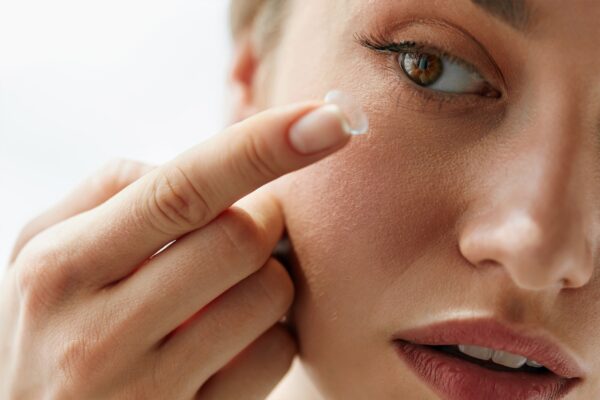
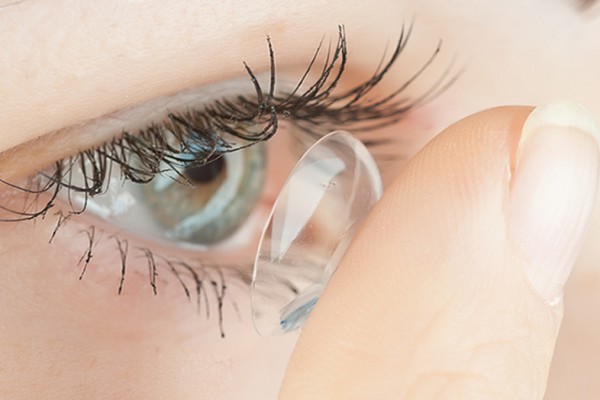
First, the prescription in your hand may be for contacts, which do not carry a PD; contacts sit on the eye, so they are measured differently from glasses. You will need a glasses prescription for this step (and if you wear both, our contact lenses range sits right alongside our glasses).
Second, a glasses prescription can simply leave the PD off, because your optician would have handled that step for you in store. Before you DIY, contact your eye doctor and ask whether they kept your PD on file.
Find your perfect pair
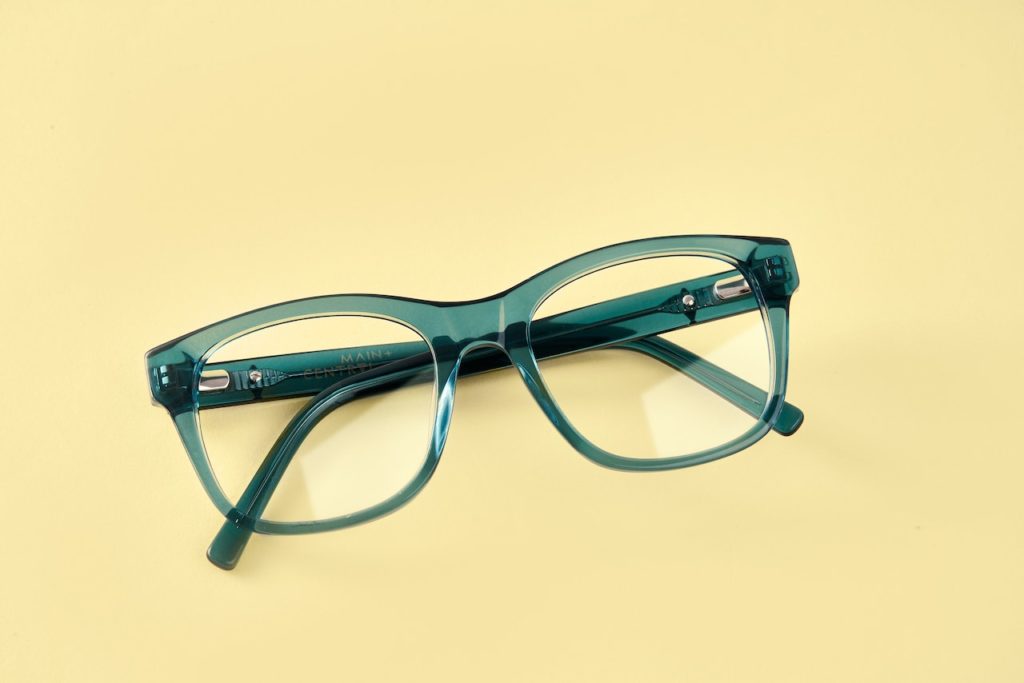
With your PD in hand, the rest is the fun part. Enter your prescription and your PD at checkout, then browse our glasses for a frame you love. Our own-brand Clearly frames are a budget-friendly place to start, and the same PD works for prescription sunglasses too, so one measurement covers every pair. We are here to help you find your focus.
Sources
[1] Cleveland Clinic — adults normally have a single pupillary distance of around 63 mm, ranging from 50 mm to 70 mm.