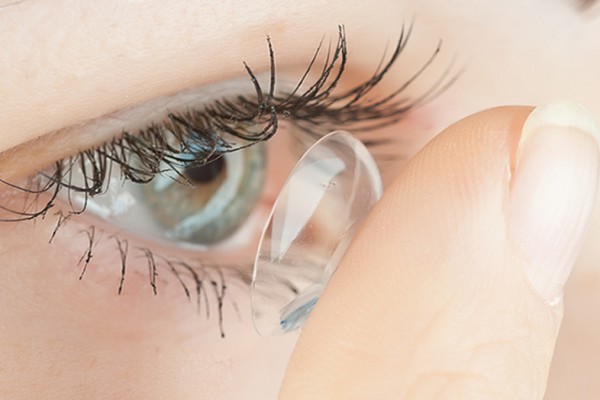


If you wear daily disposables, you go through a real mountain of packaging. Two lenses a day is 730 lenses a year, plus 730 blister packs (the foil-topped trays) and the boxes they ship in. It piles up fast, and the easiest move — flicking a used lens into the sink — is the worst thing you can do.
Here’s the thing: a contact lens is plastic, and where it ends up really matters. This is our simple guide to how to dispose of contact lenses, with no guilt and no guesswork. You’ll learn what your lenses and packaging are made of, which parts your city will recycle and the free Canadian program that takes the rest.

Are contact lenses biodegradable?
The short answer is no. Soft contact lenses are made from plastic, usually silicone hydrogel (a soft, breathable material) or plain hydrogel. A daily lens is barely 14 mm across (about the width of a fingertip). One like the everclear ELITE 5 is worn for up to 12 hours before you toss it. That daily freshness is the whole appeal, but it also means a fresh piece of plastic leaves your eyes every day.
Plastic like this does not break down the way paper or food scraps do. When researchers tracked flushed lenses through treatment plants, they found the lenses broke into tiny pieces but never broke down. [1] In other words, a lens does not really vanish — it just turns into microplastic that does not go away.
Why you should never flush a used lens
It feels harmless. The lens is tiny, the drain is right there, and it seems to just wash away. But that instinct is exactly the problem. A survey by researchers at Arizona State University asked wearers what they do with old lenses. It found that 15% to 20% flush their lenses down the sink or toilet. [1]
Once it goes down the drain, a lens heads to a treatment plant and breaks into microplastics. Some settle into sludge, and some drift out to rivers and the sea. [1] So here’s the firmest rule in this guide: never flush a lens, and never rinse one down the sink. When a lens comes out for good, drop it straight into the garbage.
Can contact lenses go in your recycling bin?
If you have ever tossed a blister pack into your household recycling (the Blue Box, in much of Canada), you are not alone. It seems obvious, since plastic belongs in the recycling bin. The real problem is size: a lens barely 14 mm wide slips straight through sorting screens built for bottles and cans.
Contact lenses and blister packs are too small for city recycling machines to catch, so they can’t be recycled there. [2] Loose in the bin, they fall through the screens or jam the gear, ending up as waste anyway. More than 290 million contact lenses reach Canadian landfills or waterways every year. [2] Tossing a lens in the garbage still beats flushing it, but there is a better route, and it is free.

Contact lens packaging recycling, part by part
A week’s worth of empty packaging is genuinely confusing to sort. The good news is that some of it your city will take, so contact lens packaging recycling is not all-or-nothing. Here is what to do with each piece.
| Component | Made of | Where it goes |
|---|---|---|
| Outer carton | Paperboard | Municipal paper and cardboard recycling (flatten it first) |
| Blister trays | Polypropylene | Too small for the Blue Box — save for a lens program |
| Foil lids | Aluminum and plastic film | With the trays, not the recycling bin |
| Solution bottles | High-density polyethylene | Usually accepted in municipal plastics, empty and capped |
| Lens case | Rigid polypropylene | Small and easily missed — see below |
That last row trips people up, so contact lens case recycling deserves its own note. If you wear monthly or two-week lenses, swap the case often for hygiene, and ask your optometrist how often is right for you. When you retire an old case, empty it and let it dry, then check whether your city takes small rigid plastics. Many sorters miss anything that small, so when in doubt, add it to a lens recycling drop-off.
The free program that recycles the rest
Here’s how to handle the parts your curbside bin turns down. In 2020, Bausch + Lomb teamed up with a recycling company called TerraCycle. Together they launched Every Contact Counts, the first contact lens recycling program in Canada. [2] TerraCycle handles waste that is hard to recycle, from cigarette butts to old contact lenses, so this is right up its alley.
The program takes used lenses and blister packs, foil lids and all, from every brand, not just Bausch & Lomb, and it costs you nothing. [3] You gather your empty, dry packaging at home, then drop it at an eye care office that takes part. You can find the nearest one on TerraCycle’s map. There is no account to set up and no label to print, but the packaging must be dry, since drop-off points won’t take wet items. [3]
After that, the lenses and packs go to a TerraCycle plant to be cleaned and sorted. The metal foil is recycled on its own, while the lenses and plastic trays are melted down and remoulded into new products. [2]
Fit it into your routine
None of this has to be a project. If you find the routine fiddly, keep it simple. Park a small tub by the bathroom mirror for used lenses and empty blister packs, and tip it into a drop-off at your next eye exam. Flatten the boxes into the paper recycling as they arrive. The one rule to lock in today is the easiest of all: the sink and the toilet are never an option.
Are you rethinking your lenses anyway? It is worth asking your optometrist what suits your eyes and your week, since a monthly lens, for example, makes far less packaging than a daily. Browse the full range of contact lenses at Clearly. Weigh up daily disposables if convenience wins, or look at Bausch & Lomb if you want to pair your lenses with the brand behind Every Contact Counts. Small swaps at home, and not a single lens down the drain.
Sources
[1] Arizona State University, research presented at the American Chemical Society (2018) — 15% to 20% of contact lens wearers flush their lenses down the sink or toilet. The lenses then break into microplastics instead of breaking down.
[2] Bausch + Lomb and TerraCycle, Every Contact Counts announcement (2020) — lenses and blister packs are too small for city recycling machines to catch, so they can’t be recycled there. More than 290 million contact lenses reach Canadian landfills or waterways each year. It was the first contact lens recycling program in Canada.
[3] TerraCycle — Every Contact Counts takes lenses and blister packs from all brands for free, with no account or label needed. Drop-off packaging must be dry.