
A microfibre cleaning cloth doesn’t really wear out so much as fill up with everything it wipes off your lenses. Every pass leaves a little skin oil, hand cream and dust behind in fibres split far finer than a human hair. Once those tiny channels are packed full, the cloth stops lifting grime and simply moves the same smear around the glass. The fix is not a new cloth but a wash by hand. Use lukewarm water and a single drop of mild, unscented soap, then lay it flat to dry. Here is why that works, along with the everyday laundry habits that quietly ruin a good cloth long before its time.
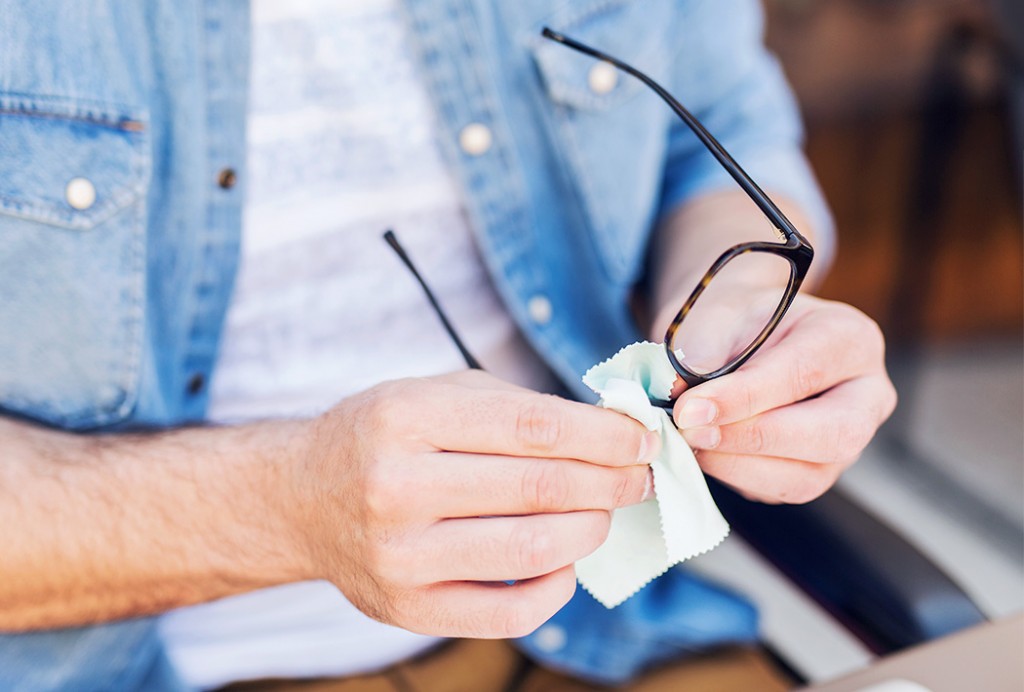
Why microfibre lifts grime instead of smearing it
A cleaning cloth is not just a soft square of fabric but a piece of microfibre, a man-made weave split into threads much finer than a human hair. Those split ends give it an enormous amount of surface area, and the fibres also pick up a light static charge as you wipe them across the glass. That surface and that charge work together to pull oil and dust off the lens instead of shoving the mess around.
A paper towel or the hem of your shirt does exactly the opposite, dragging grime into new streaks with its rough wood-pulp or cotton fibres. Worse, those coarse fibres can slowly scratch an anti-reflective coating, the thin lens layer that also cuts glare and is well worth protecting. Both cloths Clearly sells are built for the job. The Ray-Ban Cleaning Cloth and the house-brand Generics Glasses Black Cloth share that same fine, split-fibre weave. Each one works well until the fabric is saturated with the oil and dust it has picked up. Wipe your lenses every single day and even a good cloth can lose its edge within a few short weeks. That is the moment a proper wash does far more good than reaching for a brand-new replacement.
What you actually need before you wash it
Skip the lens spray for this particular job, even though it seems like the obvious tool to reach for. Clearly’s Ultimate Glasses Cleaning Kit pairs a lens spray with its own microfibre cloth and a small storage pouch. That spray is formulated for the glass rather than the fabric, so misting the cloth with it only adds another residue you will have to rinse out later.
The real shopping list for washing a cloth is refreshingly short. Most cloths need nothing more than lukewarm water and a mild, bleach-free soap with no added scent or lotion. Plain dish soap or an unscented hand soap will both do the job. Lay out a clean, dry towel to blot the cloth on afterwards and you have everything you need. There is no call for brushes, vinegar or any kind of special cloth cleaner.
How to wash a microfibre lens cloth, step by step
These steps get a clogged cloth back to lifting dust rather than smearing it, and most people skip the first one and pay for it later in fine scratches:
- Shake the cloth out firmly over the sink first, because loose grit turns into sandpaper the moment water hits the fibres.
- Wet it in lukewarm water rather than hot. Then work a drop or two of mild soap through it with your fingers for about 30 seconds.
- Rinse it well under running water until no suds are left. Leftover soap dries into a film that smears lenses just as badly as oil.
- Squeeze the water out gently instead of wringing or twisting, because twisting pulls the fine weave out of shape and weakens its grip.
- Lay it flat on a dry towel away from direct sun and heat vents, and let it air dry completely before you fold it away.
How often is often enough? If you wipe your glasses every day, wash the cloth roughly once a week. If you only reach for it now and then, once a month is plenty. A cloth that never sees water just carries the same grime back to your lenses no matter how often you use it. Keeping a second cloth in the drawer means a clean one is always ready while the first is drying.

Three habits that quietly wreck a cleaning cloth
When a cloth leaves the same faint streak no matter how you wipe, the cause is almost always one of three habits in your laundry routine. The first is fabric softener and dryer sheets. Both coat the fibres in the same waxy film that makes bath towels feel so fluffy. That film seals off the microscopic gaps a microfibre cloth relies on to trap dust. The cloth then looks clean while it smears every lens it touches.
Bleach does its damage in a different way. It breaks down the threads themselves, so the cloth loses its fine weave and degrades into an ordinary, fluff-shedding rag. The third habit is the one most people never suspect: washing the cloth in a load with towels, fleece or anything else that sheds lint. The very static pull that lifts dust off your lenses is just as good at grabbing loose fluff from everything else in the drum. Next time you wipe your glasses, that borrowed fluff simply lands right back on the lens where you least want it. Wash a lens cloth on its own or with other microfibre only, and never iron it, because the heat will scorch or melt the fibres outright.
When a cloth is past saving
A wash will not rescue every cloth in the end, and it helps to know when one is genuinely past saving. If yours still leaves a faint film or sheds bits of lint right after drying, the fibres are worn out or clogged for good. The same goes for a cloth that has turned stiff, thinned in patches or stayed stubbornly grey however carefully you launder it. Retire that cloth before it starts pressing fine scratches into your lenses instead of cleaning them. A replacement costs only a small fraction of the lenses it is meant to protect.
Clearly carries plain, honestly made replacements from both Generics, the house label for accessories such as cases and cloths, and from Ray-Ban. You can buy a single cloth on its own, or step up to a fuller Ray-Ban Care Kit that adds a lens spray, a protective case and a mini screwdriver. The current line-up and up-to-date pricing both live on Clearly’s accessories range whenever you need them.
Sometimes the wear turns out to be in your lenses rather than the cloth, and that is a different problem entirely: a scratched coating that no amount of cleaning will fix. Before you spend on kit after kit chasing a coating that is already gone, it is worth reading how buying a new pair online actually works. Then keep one clean cloth in steady rotation, so a wash day never leaves you reaching for the hem of your shirt.